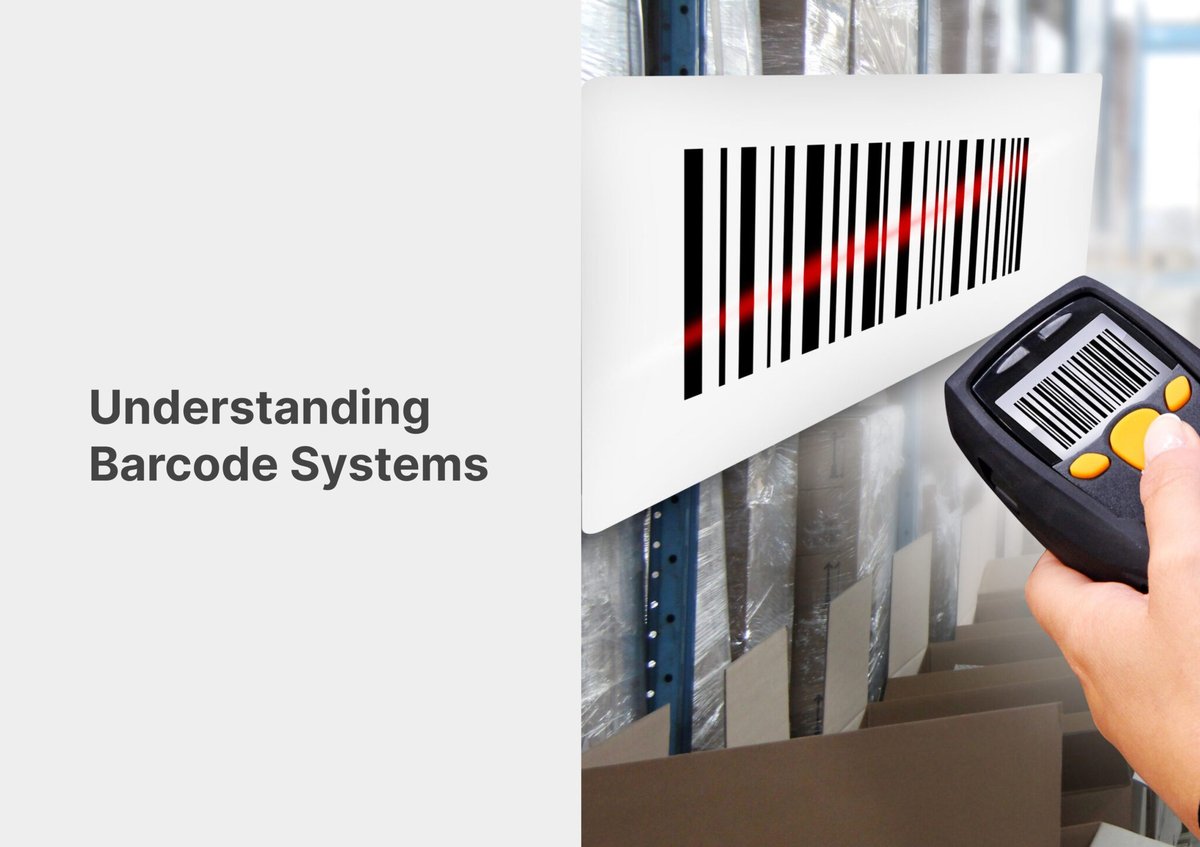
Manufacturing today isn't just about making products; it's about knowing where every single component comes from, where it goes, and what journey it takes. This deep dive into Understanding Barcode Generation for Industrial Applications isn't merely an academic exercise; it's a critical pathway to achieving that granular visibility, ensuring everything from regulatory compliance to consumer safety. Without a robust system for generating and managing barcodes, your entire production line can become a black box, vulnerable to quality issues, costly recalls, and significant operational inefficiencies.
Imagine a manufacturing floor humming with activity, materials flowing, products taking shape. At every step, data is being captured, telling a story of origin, process, and destination. This isn't magic; it's the meticulous application of barcodes, serving as tiny digital passports for every item.
At a Glance: Why Barcode Generation is Your Industrial Backbone
- Unlocks True Traceability: Track every item, batch, and component from raw material to finished product and beyond.
- Boosts Operational Efficiency: Automate inventory, streamline logistics, and reduce manual errors.
- Ensures Quality Control: Instantly identify and isolate defective batches, pinpointing root causes.
- Guarantees Regulatory Compliance: Meet stringent industry and government standards for safety and origin.
- Safeguards Brand Reputation: Respond swiftly and accurately to recalls, building consumer trust.
- Drives Data-Driven Decisions: Real-time insights for optimization, waste reduction, and continuous improvement.
The Indispensable Role of Barcodes in Modern Industry
At its core, industrial manufacturing thrives on predictability and precision. Barcodes provide the backbone for both, acting as a universal language for machines and systems to identify, track, and manage physical goods. They're not just lines and spaces; they're encoded information vital for inventory management, production tracking, and quality assurance. Without them, the intricate dance of a modern supply chain quickly devolves into chaos.
Consider the complexity: thousands of parts, multiple assembly lines, varied product configurations, and a global distribution network. Each element needs a unique identifier. This is where Datalogic identification devices, vision systems, and sensors come into play, detecting object presence, assuring quality, and ultimately identifying items with laser marking. These technologies lay the groundwork for effective barcode generation and reading.
Beyond the Basics: What Industrial Barcode Generation Truly Means
Generating a barcode isn't just about printing a graphic. In industrial settings, it's a strategic decision involving choice of symbology, printing technology, placement, and environmental considerations. You're creating a durable, machine-readable mark that must survive harsh conditions, integrate seamlessly with automated systems, and provide reliable data throughout its lifecycle.
Anatomy of an Industrial Barcode: 1D vs. 2D
When we talk about barcode generation, we're usually referring to two primary categories:
- 1D Barcodes (Linear): These are the familiar parallel lines of varying width (e.g., UPC, Code 39, Code 128). They store data horizontally, typically for product identification or serial numbers. They are simple, widely used, and easy to print, but have limited data capacity.
- 2D Barcodes (Matrix): These include QR codes, Data Matrix, and Aztec codes. They store data both horizontally and vertically, allowing for significantly more information in a smaller space. This can include batch numbers, expiry dates, URLs, or even small documents. Their redundancy features often make them more robust and readable even if partially damaged.
For industrial applications, 2D barcodes are increasingly preferred due to their high data capacity and resilience, especially in environments where labels might get scuffed or dirty.
The Art of Encoding: Transforming Data into Scannable Marks
Barcode generation software takes your crucial data – product IDs, serial numbers, lot codes, timestamps – and translates it into a visual pattern that fixed industrial and handheld barcode readers can interpret. This process involves:
- Symbology Selection: Choosing the right barcode type based on data capacity needs, industry standards, and scanning environment.
- Data Formatting: Ensuring your data is clean, consistent, and correctly structured for the chosen symbology.
- Error Correction (for 2D codes): Building in redundancy to allow codes to be read even with partial damage, a crucial feature in industrial settings.
Navigating the Industrial Landscape: Barcode Generation Across Sectors
The 'how' and 'what' of barcode generation vary significantly depending on your industry. Each sector presents unique challenges and demands specific solutions for optimal traceability.
Food & Beverage Traceability: From Farm to Fork, Flawlessly Tracked
In the food and beverage industry, traceability isn't just good practice; it's a non-negotiable legal and ethical imperative. Accurate tracking ensures efficient inventory, swift issue identification during recalls, and consumer safety. Real-time data collection provides critical insights for operational optimization, making it possible to trace product origin and movement during contamination events.
Implementing robust F&B traceability involves:
- Unique Item Identifiers: Tracking single items with unique barcodes for precise traceability at every step. This might involve direct marking on packaging or labels that withstand refrigeration or moisture.
- Logging Production Steps: Barcodes linked to manufacturing and routing steps, including timestamps, operator IDs, and tools used, create a comprehensive digital paper trail.
- Raw Material Tracking: Tracking serial numbers, batches, and lots of raw materials with barcodes ensures effective inventory management and backward traceability.
- Physical Identifiers: From individual item labeling to efficient barcode reading at various points—production, intralogistics, and inventory control—physical identifiers are paramount.
- Quality Control Logs: Consistent quality checks and periodic inspections are logged via barcode scans, completing the traceability loop.
New technologies like IoT, smart labels, and blockchain-based systems are revolutionizing F&B traceability, enhancing compliance and consumer confidence. However, barcodes remain primary for product identification, making high-performance readers integral for accurate traceability across fixed, handheld, and mobile applications. Datalogic's vision systems and industrial barcode readers are critical here, capable of reading codes on various packaging materials at high speeds.
Automotive Manufacturing: Precision on the Production Line
Automotive manufacturing operates on a tight schedule with zero tolerance for errors. Supply chain visibility from raw materials through finished goods is paramount, supporting both manual and automated systems. Barcode generation plays a crucial role in:
- Component Tracking: Every part, no matter how small, receives a barcode for identification. This is vital for managing vast inventories and ensuring the right component reaches the right assembly point at the right time.
- Assembly Process Validation: Barcodes on sub-assemblies and finished vehicles verify that correct parts are installed, preventing costly rework and recalls.
- Quality Control & Warranty: Tracking individual vehicles and their components via barcodes allows for precise issue identification and efficient warranty claims, improving after-sales service.
Datalogic provides specialized industrial barcode readers and laser marking solutions for these environments, capable of reading codes on metal parts, PCBs, and painted surfaces, maintaining end-to-end supply chain visibility.
Electronics Manufacturing: Miniaturization Meets Traceability
The electronics industry deals with incredibly small, high-value components where precision and quality control are paramount. Barcodes enable:
- PCB Component Placement: Vision systems, often integrated with barcode readers, verify correct component placement on PCBs.
- Material Identification: Accurate tracking of delicate and expensive components, from raw silicon wafers to finished microchips, preventing errors and ensuring inventory accuracy.
- Subassembly Inventory Control: Handheld scanners and mobile computers maximize efficiency for managing subassembly inventory and maintaining overall supply chain visibility.
Datalogic's state-of-the-art industrial barcode readers and laser marking solutions offer the precision needed for these applications, even on the smallest components, enhancing quality control and traceability.
Automated Machinery: The Invisible Hand of Identification
Sectors like Textile, Woodworking, Metalworking, Paper Mills, Printing, Ceramic, and Glass Production rely heavily on automation. Here, barcode generation and reading facilitate:
- Material Flow Control: Sensors and barcode readers ensure the correct materials are fed into processing machinery, preventing misfabrication.
- Product Identification Through Stages: Tracking products as they move through various stages of cutting, shaping, treating, and finishing, especially in environments with high heat, dust, or chemicals.
- Quality Inspection: Vision systems, combined with barcode data, inspect products for defects at various points, flagging anomalies immediately.
Datalogic solutions provide not just materials and parts detection with sensors and vision systems, but also full traceability with barcode marking and readers, ensuring process integrity and product quality.
Intralogistics: The Final Mile of Manufacturing Control
Once products are manufactured, the journey through the warehouse and onto distribution is critical. Intralogistics covers end-of-line packaging, palletizing, robotics, automated warehouses, and AGVs. Barcodes here ensure:
- Packaging Verification: Correct products are packed into the right containers, with accurate labeling.
- Pallet Tracking: Every pallet, containing multiple items or cases, receives a master barcode for efficient storage, retrieval, and shipping.
- Automated Movement: AGVs and robotic systems use barcodes to navigate and identify goods, ensuring efficient flow and reducing human error.
- Shipment Accuracy: Complete traceability of items, boxes, bundles, and pallets prepares goods for distribution and retail supply chains, minimizing mis-shipments.
Datalogic solutions provide safety devices, automatic object presence detection, dimensioning, positioning, and complete traceability throughout these complex intralogistics operations.
Best Practices for Robust Barcode Generation
Generating effective barcodes for industrial use requires more than just a printer. It demands a holistic approach to ensure reliability and longevity.
- Select the Right Symbology: Match the barcode type (1D vs. 2D, specific code standards) to your data capacity needs, industry requirements (e.g., GS1 standards), and reading environment. For high data volume and resilience, 2D codes like Data Matrix are often superior.
- Choose the Optimal Marking Technology:
- Direct Part Marking (DPM) with Laser Marking: Ideal for metal, plastic, and ceramics, offering extreme durability against abrasion, chemicals, and heat. This creates permanent marks crucial for lifetime traceability in automotive or electronics.
- Thermal Transfer Printing: Best for labels on packaging, pallets, or items needing robust labels that can withstand moderate industrial conditions.
- Inkjet Printing: Suitable for high-speed marking on various surfaces, often used for batch codes or expiry dates.
- Ensure Print Quality and Placement:
- High Contrast: Barcodes must have clear contrast between light and dark elements for reliable scanning.
- Resolution: Adequate print resolution prevents fuzzy edges that hinder readability.
- Placement: Position barcodes in a flat, easily accessible area, avoiding curves, seams, or areas prone to damage or obstruction.
- Consistency: Maintain consistent size, orientation, and placement across all items.
- Validate and Verify: Don't just print; verify. Use barcode verifiers to grade the quality of your generated codes immediately after marking. This catches issues before they propagate through the supply chain.
- Integrate with Your Systems: Your barcode generation process should be seamlessly integrated with your ERP, MES, or WMS systems. This ensures data consistency, automates the generation of unique identifiers, and reduces manual data entry errors.
- Consider Environmental Factors:
- Temperature & Humidity: Labels and inks must withstand extreme conditions.
- Chemical Exposure: If products are exposed to solvents or cleaners, marks must be resilient.
- Abrasion: For items handled frequently or moving on conveyor belts, durable marking is essential.
- Plan for Redundancy (2D codes): Utilize the error correction capabilities of 2D barcodes to ensure readability even if parts of the code are damaged.
Common Pitfalls to Avoid in Barcode Generation
Even with the best intentions, mistakes happen. Knowing what to watch out for can save you significant headaches.
- Low Contrast or Poor Print Quality: This is the most common issue. Faded ink, smudged prints, or low-resolution marks are unreadable, leading to production stoppages and manual data entry.
- Incorrect Symbology Choice: Using a 1D code when a 2D code is needed for data capacity, or choosing a symbology not supported by your existing readers, creates bottlenecks.
- Improper Placement: Barcodes placed on curved surfaces, near edges, or in high-wear areas will inevitably fail.
- Lack of Verification: Assuming a barcode is good because it "looks okay" is a recipe for disaster. Regular verification is non-negotiable.
- Data Inconsistency: Mismatched data between the barcode and your database or inconsistent numbering schemes undermine the entire traceability system.
- Ignoring Environmental Factors: A barcode label that peels off in cold storage or a laser mark that degrades in harsh chemicals is useless.
- Insufficient Reader Technology: Even a perfect barcode needs a high-performance reader. Ensure your fixed industrial and handheld barcode readers are appropriate for your barcode types, speed, and environment.
The Future of Industrial Barcode Generation: Smarter, Faster, Stronger
Barcode technology isn't stagnant. Innovations are constantly improving their utility and integration within the industrial landscape.
- Enhanced Direct Part Marking: Laser marking solutions continue to advance, offering finer resolution, faster marking speeds, and capabilities for more complex materials, ensuring permanent and highly durable identification.
- Intelligent Barcode Management Software: Sophisticated software platforms are emerging that not only generate barcodes but also manage the entire lifecycle, integrating with production systems, quality control, and even compliance reporting. For example, Our Cognex barcode generator offers robust features for high-volume, high-accuracy applications.
- Integration with AI and Machine Learning: AI can analyze barcode read rates and quality data to proactively identify potential issues in the generation process, optimizing print settings or marking parameters before failures occur.
- Vision System Synergy: The combination of advanced vision systems and barcode readers allows for simultaneous quality inspection and identification, streamlining processes. Vision systems can detect flaws in the barcode itself or in the product it identifies, providing a holistic view of quality.
These advancements empower manufacturers to move beyond mere identification to predictive maintenance, proactive quality control, and truly intelligent operations.
Taking Action: Building Your Traceability Foundation
Understanding barcode generation is the first step; implementing a robust system is the critical next. Here's how you can move forward:
- Assess Your Current Needs: What level of traceability do you require? What data needs to be encoded? What are your industry's specific compliance mandates?
- Evaluate Your Environment: Consider the physical conditions your barcodes will face – temperature, moisture, chemicals, abrasion, speed of movement. This dictates marking technology and symbology.
- Invest in the Right Technology: Partner with experts like Datalogic for industrial barcode readers, laser marking solutions, and vision systems. Their expertise spans diverse industrial applications, ensuring you get solutions tailored to your specific challenges, from the smallest electronic components to large automotive parts and intricate intralogistics.
- Standardize Your Process: Develop clear protocols for barcode generation, placement, and verification across all production lines and facilities. Consistency is key.
- Train Your Team: Ensure operators and quality control personnel understand the importance of barcode integrity and how to identify and address issues.
- Continuous Improvement: Regularly review your barcode generation and reading processes. Conduct mock recalls and traceability audits to test the system's effectiveness and identify areas for enhancement.
By embracing a comprehensive approach to barcode generation, you're not just adding labels to products; you're embedding intelligence, building resilience, and establishing a future-proof foundation for your industrial operations. This is how modern manufacturing achieves true transparency, quality, and competitive advantage.