The modern industrial landscape demands precision, speed, and unwavering traceability. At the heart of achieving this lies a technology often taken for granted: barcodes. But not all barcodes are created equal. Understanding the nuances of Industrial Barcode Symbologies: 1D, 2D, QR, and Data Matrix isn't just about reading lines and squares; it's about unlocking profound efficiencies, mitigating errors, and ensuring your operations keep pace with demand.
From the first railroad car patent in 1952 to today's complex supply chains, barcodes have evolved into indispensable tools. They bridge the gap between physical items and digital information, offering instant, machine-readable data that streamlines everything from inventory management to product authentication. This isn't just about scanning a grocery item; it's about embedding intelligence into every product's lifecycle.
At a Glance: What You'll Discover
- The fundamental difference between 1D linear and 2D matrix barcodes.
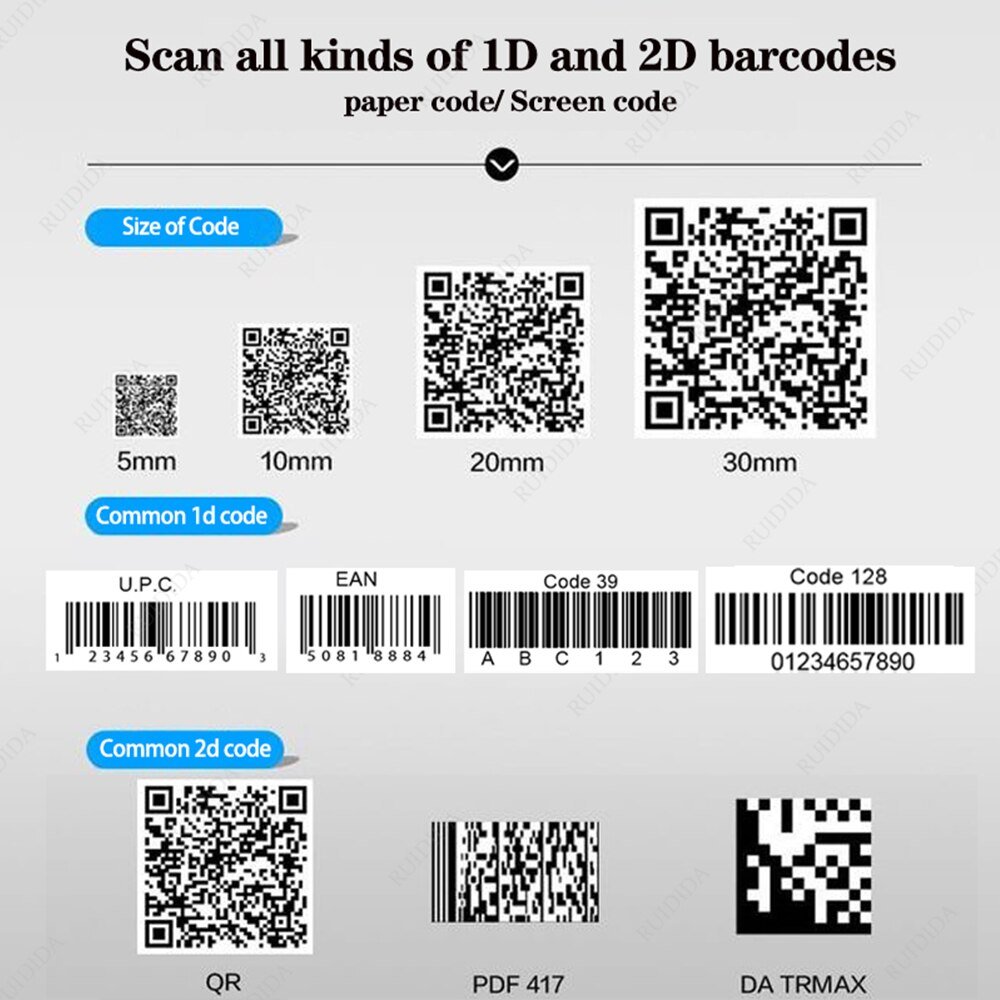
- Key characteristics and applications for common symbologies like Code 39, Code 128, UPC, EAN, QR, and Data Matrix.
- How Direct Part Marking (DPM) elevates traceability in harsh industrial environments.
- Critical factors for achieving consistently high barcode scanning performance.
- The role of industry standards in ensuring global consistency and reliability.
- Practical guidance on choosing the right barcode symbology for your specific needs.
The Silent Revolution: Why Barcodes Matter in Industry
Imagine a world without barcodes. Every product would require manual identification, leading to monumental errors, glacial processing speeds, and a complete lack of real-time inventory visibility. Barcodes transformed this, beginning with their commercial debut in June 1974. They are the bedrock for efficiency, accuracy, and traceability across diverse industries.
At its core, barcode symbology is simply the method used to encode data—whether through varying widths of lines and spaces, or through patterns of dots and squares. Scanners then decode this visual information, enabling applications like pricing, order fulfillment, precise traceability, automated sortation, and rapid shipping. Barcodes can be applied in many ways: traditional pre-printed labels, tags, and stickers, or via cutting-edge Direct Part Marking (DPM) methods such as laser printing, dot peening, or engraving, which embed the code directly onto the product.
Deciphering the Code: Understanding 1D Linear Barcodes
Think of the classic supermarket barcode, and you're envisioning a 1D linear barcode. These codes store data horizontally using varying widths of parallel bars and spaces. Your scanner reads them from left to right, interpreting the pattern. The narrowest bar, known as a module, establishes the base width, with wider bars being simple multiples of this module. Some 1D barcodes stick to numbers only, while others can handle letters and symbols, offering greater flexibility. You can even adjust their height for optimal readability.
Common Industrial 1D Workhorses
- UPC (Universal Product Code): While common for groceries and household items, its retail focus means it's less frequent in heavy industrial internal tracking.
- EAN 13 (European Article Number): A global standard for retail product identification, similar to UPC but used predominantly outside North America.
- Code 39: One of the earliest alphanumeric barcode symbologies, it's incredibly versatile. If you need to track inventory or assets with both numbers and letters, Code 39 is often a go-to.
- Code 128: A high-density, highly efficient alphanumeric barcode. It's fantastic for encoding large amounts of information in a compact space, making it a favorite for logistics and shipping labels due to its fast and reliable data encoding.
- Interleaved 2 of 5 (ITF): This compact numeric-only symbology is designed for logistics and warehouse labeling. It's efficient because it encodes two digits per five bars (interleaving data within the spaces).
- GS1 DataBar Expanded: This more compact linear barcode can store more information, often used for fresh foods and specific retail applications where space is at a premium and more attributes need tracking.
- GS1 Omnidirectional: Designed for high-speed retail checkout, these codes can be scanned from almost any angle, enhancing efficiency.
Where 1D Shines: Typical Applications
- Retail Checkout: The most familiar application, speeding up transactions.
- Inventory Tracking: Managing stock levels in warehouses and distribution centers.
- Shipping Labels: Encoding tracking numbers and destination details.
- Asset Tags: Identifying and managing valuable equipment within a facility.
The Anatomy of a 1D Barcode
Beyond just bars and spaces, 1D barcodes have specific elements crucial for accurate scanning:
- Quiet Zone: Clear space surrounding the barcode, ensuring the scanner can accurately detect the start and end of the code.
- Guard Pattern: Unique bars at the beginning and end of the barcode that help the scanner identify the symbology and orientation.
- Check Digit: An error-detecting digit calculated from the other data. It helps ensure the barcode has been scanned correctly, preventing data entry mistakes.
Stepping into the Future: 2D Matrix Codes
If 1D barcodes are like a single line of text, 2D matrix codes are like a page. These advanced symbologies store data both horizontally and vertically within a compact square or rectangular pattern of uniform modules (dots or squares). This two-dimensional structure allows them to hold significantly more information than their 1D counterparts—hundreds or even thousands of characters, compared to a few dozen.
What makes 2D codes particularly robust for industrial use? They're highly readable, even if the printing quality isn't perfect, and they include redundant data. This means they can often be scanned successfully even if a portion of the code is damaged, dirty, or obscured.
Common 2D Innovators
- QR Codes (Quick Response Codes): Universally recognized, QR codes are incredibly versatile. They connect users to digital experiences like mobile payments, websites, product information, video tutorials, or even Wi-Fi networks. Their flexibility has made them popular for marketing and consumer engagement, but their industrial applications are growing, especially for linking products to extensive digital data.
- Data Matrix: This is the undisputed champion for industrial traceability, especially in manufacturing and healthcare. Data Matrix codes are compact, highly robust, and ideal for encoding large amounts of critical data (like serial numbers, batch numbers, and manufacturing dates) onto very small items or components. They are often used in Direct Part Marking applications due to their resilience.
- Aztec Barcode: Named for its central bull's-eye pattern, the Aztec barcode is known for being fast, reliable, and space-efficient. It's particularly well-suited for applications where mobile scanning and high data density are crucial, such as tickets, boarding passes, and registration documents.
Where 2D Excels: Typical Applications
- Healthcare Records: Storing patient information, medication details, and treatment histories.
- Mobile Payments: Facilitating quick and secure transactions.
- Marketing & Consumer Engagement (QR Links): Connecting physical products to rich digital content.
- Airline Boarding Passes: Encoding passenger and flight information for rapid check-in.
- Component Traceability: Tracking individual parts throughout a complex manufacturing process.
The Anatomy of a 2D Barcode
2D codes have their own distinct features that aid scanning and error correction:
- Finder Pattern: A unique pattern (often an "L" shape or a bull's-eye) that helps the scanner quickly locate and orient the code.
- Clocking Pattern (or Timing Pattern): A series of alternating light and dark modules that help the scanner determine the grid density of the code, essential for decoding distorted or imperfectly printed codes.
- Quiet Zone: Similar to 1D, this clear space ensures the scanner can properly isolate the barcode from surrounding visual noise.
1D vs. 2D: Choosing Your Industrial Ally
Deciding between a 1D and 2D barcode often comes down to the specific demands of your application. Here's a quick comparison to guide your decision:
| Feature | 1D Barcode (Linear) | 2D Barcode (Matrix) |
|---|---|---|
| Data Capacity | Low (tens of characters) | High (hundreds to thousands of characters) |
| Data Type | Numeric, alphanumeric (limited) | Numeric, alphanumeric, binary (full character set) |
| Size | Length varies with data, can be wide | Compact, fixed-size square or rectangle |
| Readability | Sensitive to damage, requires full scan | Highly resilient, readable even if partially damaged |
| Applications | Retail, simple inventory, shipping labels | Traceability, DPM, mobile marketing, healthcare |
| Scanning | Laser scanners (line of sight), imager-based | Imager-based scanners (camera-based), omnidirectional |
| Cost | Generally lower implementation for simple uses | Slightly higher for advanced scanners, but more versatile |
| For most basic applications requiring simple ID numbers, 1D barcodes remain cost-effective and efficient. However, when you need extensive data, robust readability in challenging environments, or the ability to link to rich digital content, 2D codes are the superior choice. |
Direct Part Marking (DPM): When the Barcode Becomes Part of the Product
In many industrial environments, a traditional label just won't cut it. Imagine a metal engine part, a circuit board, or a medical device that needs to be tracked throughout its entire lifecycle, often exposed to extreme temperatures, chemicals, or abrasion. This is where Direct Part Marking (DPM) shines.
DPM codes are permanent, scannable marks directly applied to a part or product itself, ensuring traceability from manufacturing through end-of-life. Methods include:
- Laser Etching/Engraving: Creating high-contrast marks by removing or altering the material surface.
- Dot Peening: Using a pin to indent a series of dots into the surface, forming the code.
- Inkjet Printing: Applying specialized inks directly to the surface, often used for plastics or packaging.
- Chemical Etching: Using acids to create the mark.
Data Matrix codes are particularly well-suited for DPM applications due to their compact size and excellent readability even with low contrast or challenging surfaces. For industries like Automotive, Aerospace (ATA/IAQG), and Medical Devices (ISO/IEC 16022, HIBCC, US FDA), DPM is not just a best practice; it's often a regulatory requirement to ensure complete product lifecycle traceability.
Mastering Barcode Performance: Keys to Flawless Operations
A barcode is only as good as its scan. Achieving consistently high read rates is paramount for maintaining efficiency and data accuracy in any industrial setting. Here are the key factors you need to master:
1. Scanner Selection: The Right Tool for the Job
This is perhaps the most critical decision. You need a scanner that not only has the proper decoding capability for your chosen symbologies (some scanners are 1D-only, others handle both) but also offers reliable performance in your specific environment. Consider factors like:
- Symbology Support: Does it read Code 128, QR, Data Matrix, or all of the above?
- Read Range: How close or far can it be from the barcode?
- Environmental Durability: Can it withstand dust, moisture, drops, or extreme temperatures?
- Connectivity: Does it integrate seamlessly into your existing management execution system (MES) via Ethernet, USB, or wireless?
- DPM Reading Capability: If you're using DPM, you'll need an imager-based scanner with specialized algorithms to read low-contrast, challenging marks. You can learn more about selecting the right tools, including options like our Cognex barcode generator, for optimal performance in various industrial settings.
2. Achieving a High Read Rate
A high percentage of successfully read barcodes directly correlates to the reliability and efficiency of your operations. Aim for 99% or higher. For instance, if your system attempts 10,000 scans and successfully reads 9,900 of them, you have a 99% read rate (9,900 ÷ 10,000 = 0.99). This minimizes manual re-entry, prevents bottlenecks, and ensures real-time data flow.
3. Print Quality: The Unsung Hero
Even the best scanner struggles with a poorly printed barcode. Monitoring and maintaining high print quality across your distribution chain is non-negotiable. This includes:
- Contrast: Sufficient difference between the dark and light elements.
- Clarity: Sharp edges, no smudges or voids.
- Size: Appropriate dimensions for the scanning environment.
- Substrate: Choosing the right label material for durability and print adhesion.
4. Seamless Data Flow: Connecting the Dots
Once a barcode is scanned, that data needs to go somewhere. Efficiently feeding scanned data into your management execution system (MES), warehouse management system (WMS), or enterprise resource planning (ERP) is vital. Technologies like Ethernet offer fast and reliable data transfer, ensuring that inventory updates, tracking information, and production data are instantly available and actionable.
Industry Standards: Ensuring Global Harmony and Reliability
Imagine if every company designed its own barcode. Chaos! Industry standards are the unsung heroes of barcode technology, ensuring consistency, accuracy, and reliability across disparate systems and global supply chains. They provide the rules for how barcodes should be formatted, printed, and decoded, enabling seamless interoperability.
Barcodes support accuracy, efficiency, and innovation in diverse industries including:
- Automotive
- Beverage
- Consumer Products
- Electronics
- Food
- Logistics
- Medical Devices
- Pharmaceutical
- Semiconductors
- Solar Wafers
Key 1D Standards:
- GS1: The global organization setting standards for identification and communication in supply chains, including UPC, EAN, and GS1 DataBar.
- AIM-Global: An industry association for automatic identification and data capture (AIDC).
- ISO/IEC: International Organization for Standardization / International Electrotechnical Commission, which publishes many barcode specifications.
- MIL-STD-1189: A military standard for 1D bar codes.
- ANSI: American National Standards Institute.
- HIBCC (Health Industry Business Communications Council): Specific standards for healthcare product identification.
- US FDA (U.S. Food and Drug Administration): Mandates specific barcode use for medical devices and pharmaceuticals.
Key 2D Standards:
- AIM-DPM: Standards specifically for Direct Part Marking quality and readability.
- GS1: Also provides standards for 2D codes like GS1 DataMatrix and GS1 QR Code.
- ISO/IEC 16022: The international standard specifically for Data Matrix barcodes.
- AIAG (Automotive Industry Action Group): Standards for automotive suppliers.
- US DoD (U.S. Department of Defense): Mandates 2D codes for parts and items supplied to the military.
- ATA/IAQG (Air Transport Association / International Aerospace Quality Group): Standards for aerospace components.
- MIL-STD: Various military standards for 2D codes.
Adhering to these standards isn't optional; it's a prerequisite for participation in many global supply chains and a cornerstone of reliable data exchange.
Making the Right Choice: Selecting the Best Symbology for Your Needs
Choosing the correct industrial barcode symbology is a strategic decision that impacts efficiency, cost, and long-term traceability. Here’s a framework to guide your selection:
- Data Capacity Requirements:
- Low (tens of characters, typically numeric): A 1D code like Code 39 or Code 128 might suffice for simple part numbers or serialized IDs.
- High (hundreds to thousands of characters, complex data): You'll need a 2D code like Data Matrix or QR for lot numbers, expiration dates, URLs, or extensive product specifications.
- Physical Space Constraints:
- Ample space: 1D codes are fine, but remember they get wider with more data.
- Limited space (e.g., small electronic components, surgical tools): Data Matrix is often the best choice due to its compact nature.
- Environmental Durability:
- Clean, controlled environments: Labels with 1D or 2D codes are generally adequate.
- Harsh environments (heat, chemicals, abrasion, dirt): You’ll absolutely need robust 2D DPM codes (Data Matrix is dominant here), along with industrial-grade DPM readers.
- Application Type:
- Retail/Consumer-facing: UPC, EAN, QR codes (for digital engagement).
- Warehouse/Logistics: Code 128, Interleaved 2 of 5, GS1 DataBar for linear; Data Matrix for more detailed pallet/package info.
- Manufacturing/Traceability (internal parts): Data Matrix (especially DPM), Code 128.
- Mobile Scanning/Marketing: QR codes.
- Healthcare/Pharmaceutical: Data Matrix, specific GS1 standards.
- Scanner Technology Availability & Cost:
- 1D laser scanners are often less expensive but limited.
- 2D imager-based scanners (camera-based) are more versatile, reading both 1D and 2D, and are essential for DPM. Factor this into your budget.
- Industry Standards & Regulatory Compliance:
- Does your industry (e.g., Automotive, Aerospace, Medical Devices) mandate a specific symbology or a DPM approach? Always verify and comply with relevant standards (GS1, ISO/IEC, AIM-DPM, etc.).
Common Questions & Misconceptions
Q: Can a 1D scanner read a 2D barcode?
A: No, typically not. 1D laser scanners project a single line of light and can only interpret horizontal bar patterns. 2D imagers (camera-based scanners) are designed to capture a 2D image and decode the matrix pattern.
Q: Are QR codes just for marketing?
A: While popular in marketing, QR codes are robust 2D symbologies with significant industrial potential. They can link to detailed product manuals, repair instructions, service histories, or augmented reality experiences, providing rich data far beyond a simple product ID.
Q: What's the main advantage of Data Matrix over QR codes for industrial use?
A: Data Matrix codes are generally more compact for the same amount of data and are particularly optimized for DPM applications on metal or plastic surfaces where high contrast isn't always achievable. While QR codes are highly versatile, Data Matrix often offers superior performance and resilience in highly demanding manufacturing and tracking environments.
Q: Do I need a quiet zone for every barcode?
A: Yes. The quiet zone (a clear space around the barcode) is crucial for all symbologies. It tells the scanner where the barcode begins and ends, preventing it from misinterpreting surrounding text or graphics as part of the code.
Your Path Forward: Optimizing Your Barcode Strategy
Navigating the world of industrial barcode symbologies can feel complex, but with the right knowledge, you can make informed decisions that drive real operational improvements. The goal isn't just to "have barcodes," but to deploy a system that enhances efficiency, boosts accuracy, and provides unwavering traceability for every product and component.
Start by assessing your specific needs: What data do you need to encode? Where will the barcode be placed? What kind of environment will it endure? Which industry standards apply? Then, select the symbology that best fits these criteria, invest in the right scanning technology, and prioritize print quality and data flow. By doing so, you'll transform your barcodes from simple labels into powerful data conduits, ready to support the demands of modern industry.