In the intricate dance of modern logistics and manufacturing, precise data flow isn't just an advantage—it's the backbone of operational efficiency. At the heart of this data revolution often lies robust Cognex Barcode Reader Integration & Compatibility, transforming raw scans into actionable intelligence. Without a system that seamlessly captures, interprets, and communicates barcode data, even the most sophisticated supply chains can grind to a halt.
This isn't just about reading a barcode; it's about connecting every dot in your operational network. It’s about ensuring that a product moving from production to packaging, from warehouse to delivery truck, is tracked flawlessly, without bottlenecks or errors. Cognex, a pioneer in machine vision and industrial ID, offers a formidable range of readers designed for exactly this purpose. But their power isn't fully unlocked until they're integrated smoothly into your existing infrastructure.
Cognex Barcode Reader Integration: Your Operational Compass
Understanding how Cognex readers fit into your broader system is key to unlocking their full potential. Here’s what you need to know at a glance:
- Symbology Prowess: Cognex readers handle everything from common 1D barcodes to complex 2D Data Matrix codes, including those that are damaged, low-contrast, or marked directly onto parts (DPM). Future-proof your operations by anticipating diverse code types.
- Unmatched Read Rates: Aim for near 100% read rates. Cognex devices excel at deciphering "noisy" or difficult-to-read codes, minimizing costly manual interventions and maximizing throughput.
- Application-Specific Design: Choose the right reader type—fixed-mount for automated lines, handheld for operator flexibility, or mobile for field applications—to perfectly match your environment.
- Industrial Communication Powerhouse: Seamlessly integrate with your network using a wide array of industrial protocols like Ethernet, USB, RS-232, Ethernet/IP, PROFINET, and Modbus TCP/IP.
- Smart Investment: Modern image-based Cognex readers offer superior functionality (no moving parts, 2D capability, image archiving) at a cost comparable to less capable laser scanners, leading to lower long-term ownership costs.
- Integrated Solutions: Beyond hardware, Cognex provides powerful software tools like DataMan Setup Tool and VisionPro for configuration, optimization, and data management.
Beyond the Scan: Understanding Core Compatibility Factors
Selecting and integrating a barcode reader is far more nuanced than simply picking a device that "scans." It requires a strategic assessment of your current and future needs, focusing on factors that dictate both compatibility and long-term performance.
Decoding the Data: Symbology Versatility
Your barcodes are the language of your products, and your reader must be a fluent interpreter. While today you might primarily use 1D barcodes for inventory, your data requirements are almost certainly poised to grow. Future needs could necessitate 2D codes for richer data storage (like part history, serial numbers, or batch information) or the ability to read Direct Part Marks (DPM) directly etched onto components in harsh industrial environments.
Cognex readers are built for this evolution. They provide advanced technology for reading both 1D barcodes and 2D Data Matrix codes, regardless of their size, quality, printing method, or the surface they’re marked on. This robust capability means you won't need to completely overhaul your identification system as your business scales or your code quality fluctuates. Investing in a reader that can handle compromised 1D barcodes or seamlessly transition to 2D codes is a vital step in the ultimate Cognex barcode generator guide to future-proofing your operations and avoiding costly equipment upgrades down the line.
The Speed & Reliability Imperative: Maximizing Read Rates
In any high-volume operation, every unread barcode translates directly into delays, manual labor, and potential errors. Read rate, expressed as a percentage of successfully read barcodes out of total attempts, is a critical metric. The closer you get to 100%, the smoother your operations.
Cognex image-based readers are engineered to achieve exceptionally high read rates, even in challenging conditions. They are designed to "read noisy codes"—those printed on cardboard, scratched, deformed, or exhibiting low contrast—not just pristine ones. This resilience is paramount for maintaining operational efficiency, especially when product quality or handling might compromise code integrity along the supply chain. High read rates ensure that your automated systems run continuously, minimizing interventions and maximizing throughput.
Fit for Purpose: Matching Readers to Your Operational Landscape
The physical environment and specific application dictate the most suitable type of barcode reader. Cognex offers a diverse portfolio to match virtually any scenario:
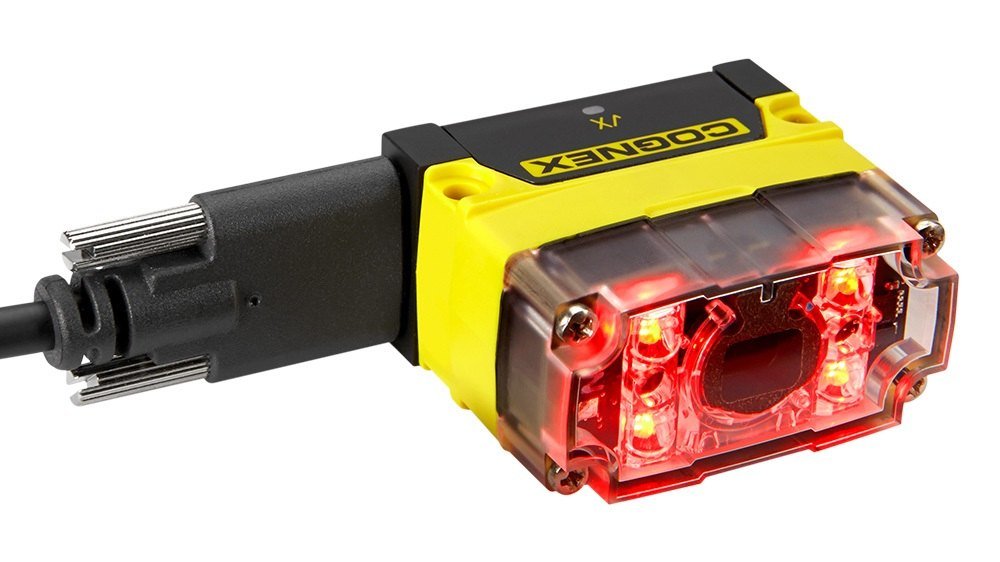
- Fixed-Mount Barcode Readers: Ideal for automated, hands-free scanning, these compact devices are typically mounted on production lines or conveyors. They shine in high-speed applications where cartons of various sizes move rapidly. Cognex DataMan fixed-mount readers (like the DataMan 50/60, 150/260, 100/200, 300/360 Series, and In-Sight ID Series) integrate lighting, camera, processor, and communications into a single, small package, making them perfect for demanding, space-constrained applications. Their lack of moving parts translates to greater durability and reliability compared to traditional laser scanners.
- Handheld Barcode Readers: When flexibility and operator interaction are key, handheld readers are the answer. Perfect for dock workers checking incoming materials or outgoing products, these can be corded or wireless. Cognex DataMan industrial handheld readers (including the DataMan 8600, 8050, and 700 Series) deliver unmatched performance for both direct part marks (DPM) and label-based applications. Their ruggedness, ability to read challenging marks quickly, and field-interchangeable communication modules make them incredibly versatile.
- Mobile Computers: For field technicians, couriers, or mobile inventory checks, mobile barcode readers with built-in code reading capabilities are invaluable. These devices are often purpose-built for specific applications or smartphone-based with rugged enclosures, enabling quick scans and data verification on the go. Cognex mobile computers are designed for factory floor conditions but remain lightweight and ergonomic, featuring unmatched code reading and Wi-Fi communications.
- Barcode Verifiers: Beyond reading, ensuring code quality is crucial. Cognex barcode verifiers provide fully integrated solutions for quality verification and data validation at every step of the DPM process, offering compliant results and ease of use.
The Digital Handshake: Communication Protocols for a Connected Enterprise
Once a barcode is read, the data isn't just passively stored; it needs to be actively used within your plant or distribution center network. Seamless integration hinges on the reader's ability to "speak the same language" as your existing control systems, PLCs, and manufacturing execution systems (MES).
Cognex image-based barcode readers offer a comprehensive suite of industrial communication protocols, including:
- Ethernet (TCP/IP): A ubiquitous standard for high-speed data transfer, ideal for networking multiple readers and connecting to central servers.
- USB: Convenient for local configuration, data download, and direct connection to PCs.
- RS-232: A traditional serial communication standard still widely used for point-to-point connections to PLCs or older control systems.
- Discrete I/O: Simple input/output signals for triggering scans or indicating read status directly to PLCs.
- EtherNet/IP, PROFINET, Modbus TCP/IP: These are industry-standard fieldbus protocols, essential for direct integration into PLC-controlled automation systems (e.g., Allen-Bradley, Siemens, Rockwell). They allow readers to become native components of your automation architecture, simplifying setup and data exchange.
This extensive range of options simplifies integration between the reader and your network, which is critical not only for sending product tracking information but also for archiving images of unread codes for audit trails and process improvement. The ability to switch communication modules on handheld readers further enhances their adaptability.
Investing Wisely: The True Cost of Ownership
When evaluating barcode readers, the initial purchase price is just one piece of the puzzle. The true "cost of ownership" encompasses longevity, maintenance, operational efficiency, and future adaptability. While image-based barcode readers once carried a higher price tag than laser scanners, advancements in microprocessor and CMOS digital sensor technology have dramatically shifted this landscape.
Today, the latest image-based Cognex readers are comparably priced to industrial laser scanners, yet offer significantly more functionality. They boast nearly equivalent speeds to the fastest laser scanners but come with inherent advantages:
- No Moving Parts: Unlike laser scanners with delicate oscillating mirrors, image-based readers have no mechanical parts to wear out or fail, leading to greater durability and reduced maintenance.
- 2D Code Capability: Crucially, image-based readers can read 2D codes (like Data Matrix and QR codes) and damaged or omnidirectional 1D codes, which laser scanners cannot. This is vital for complex data capture and flexible product positioning.
- Image Archiving: The ability to store images of codes, especially unread ones, provides invaluable data for troubleshooting, process optimization, and audit purposes—a feature absent in laser scanners.
These benefits translate into higher uptime, lower repair costs, greater operational flexibility, and a stronger return on investment over the reader's lifespan.
A Closer Look at Cognex Solutions: Fixed, Handheld, and Mobile Prowess
Cognex's commitment to cutting-edge ID technology is evident across its product lines, each tailored for specific integration needs and operational environments.
Automating with Precision: Fixed-Mount DataMan Readers
Fixed-mount DataMan readers are the workhorses of automated production lines and logistics hubs. Their robust design, combining powerful lighting, high-resolution cameras, advanced processors, and comprehensive communication options into a compact unit, makes them ideal for demanding applications.
- Best-in-Class Performance: Leveraging patented Cognex 1D barcode and 2D matrix code reading software algorithms, these readers achieve the highest read rates on even the most challenging codes.
- Flexible Optics & Lighting: Adaptable lenses and integrated, configurable lighting options ensure optimal image capture for diverse surfaces and code types.
- Ease of Use & Deployment: With features like easy setup tools and industrial connectivity, deployment is quick and efficient, minimizing downtime.
- DataMan Series Highlights: The DataMan 150/260 Series offers high-performance reading in a compact footprint, while the DataMan 300/360 Series provides advanced capabilities for complex applications with larger reading fields. The In-Sight ID Series merges vision system capabilities with ID reading for even more intricate tasks.
Empowering Operators: Handheld DataMan for Dynamic Tasks
When products need to be handled, inspected, or tracked manually, Cognex handheld readers provide the perfect blend of performance and flexibility. They are designed for rugged conditions and challenging marks, making them indispensable in manufacturing, warehousing, and quality control.
- Unmatched DPM Reading: DataMan handhelds excel at reading direct part marks (DPM), crucial for industries like automotive and aerospace where part traceability is paramount.
- Rugged Construction: Built to withstand drops, dust, and spills, these readers ensure reliability in harsh industrial environments.
- Field-Interchangeable Communication Modules: This unique feature allows a single reader to be configured for various communication needs (e.g., wired USB, wireless Bluetooth, or Wi-Fi) by simply swapping modules, greatly enhancing versatility and future-proofing.
- Patented UltraLight®: Provides advanced lighting options for superior image formation on different surfaces and code types, ensuring consistent read rates.
Agility on the Go: Mobile Devices and Verifiers
Beyond fixed and handheld readers, Cognex extends its ID capabilities to mobile computing and quality assurance:
- Mobile Computers: These devices are purpose-built for the factory floor—rugged, yet small and lightweight enough for comfortable, ergonomic use. They feature unmatched code reading capabilities, robust Wi-Fi communications, and often support application development for tailored workflows, bringing enterprise-grade scanning to mobile operators.
- Barcode Verifiers: Ensuring your generated barcodes meet industry standards (ISO/IEC, AIM DPM) is as important as reading them. Cognex verifiers offer fully integrated design for accurate, compliant results with exceptional ease of use, preventing costly reworks and compliance issues down the line.
Blueprint for Success: A Step-by-Step Integration Guide
Successful integration of Cognex barcode readers isn't a single event; it's a process. Following a structured approach ensures you maximize performance, minimize disruption, and build a resilient data capture system.
Phase 1: Deep Dive into Your Application Needs
Before you even consider a specific reader model, thoroughly understand your operational landscape:
- Code Characteristics:
- Symbologies: Are you reading 1D (Code 39, 128, etc.) or 2D (Data Matrix, QR, PDF417) codes?
- Quality: Are the codes consistently high quality, or do they often suffer from poor contrast, damage, or distortion?
- Size: What's the smallest and largest code dimension?
- Surface: What material are codes printed on (label, cardboard, metal, plastic)? Is it reflective, curved, or textured?
- Marking Method: Labels, inkjet, laser etch, dot peen (DPM)?
- Environment & Usage:
- Location: Production line, warehouse, field?
- Movement: Are products stationary, moving at high speed, or handheld?
- Lighting: Is existing lighting consistent? Are there reflections or shadows?
- Temperature/Humidity: Are there extreme environmental conditions?
- Space Constraints: How much physical space is available for the reader?
- Operator Interaction: Is hands-free operation required, or will operators manually scan?
- Data Requirements:
- Data Volume: How many scans per minute/hour?
- Data Flow: Where does the data need to go (PLC, MES, WMS, database)?
- Archiving: Is image archiving required for audit or analysis?
- Network: What industrial network protocols are currently in use?
Phase 2: Strategic Reader Selection & Communication Planning
Based on your needs assessment, you can now narrow down your options:
- Reader Type Selection:
- High-Speed Automated Line: Fixed-mount DataMan (e.g., DataMan 260, 360).
- Manual Inventory/Quality Check: Handheld DataMan (e.g., DataMan 8050, 8600).
- Mobile Field Operations: Cognex mobile computer.
- Optics and Lighting: Cognex offers flexible optics (liquid lens, C-mount) and integrated, configurable lighting options (red, white, blue, polarized, UltraLight®) to optimize image capture for your specific code and surface.
- Communication Protocol Matching: Choose the Cognex reader model that supports your primary industrial network protocols (Ethernet/IP, PROFINET, Modbus TCP/IP for PLCs; Ethernet TCP/IP for servers; USB/RS-232 for specific local devices). Ensure your existing infrastructure can support the chosen protocol.
- Software Ecosystem: Consider the Cognex DataMan Setup Tool for easy configuration and monitoring, and potentially VisionPro software for more advanced vision applications if expanding beyond pure ID.
Phase 3: The Integration Playbook – Physical & Software Setup
This is where planning translates into action:
- Physical Mounting:
- Fixed-Mount: Mount the reader securely, ensuring it has a clear line of sight to the codes. Pay attention to working distance and angle. Use mounting brackets and protective enclosures as needed.
- Handheld: Ensure charging stations or wired connections are readily accessible and ergonomic for operators.
- Power & Cabling: Connect power and communication cables, ensuring they are properly routed and protected from physical damage or environmental factors. Use industrial-grade cabling where appropriate.
- Network Configuration:
- IP Addressing: Assign static IP addresses (for Ethernet-based readers) or configure network parameters according to your IT/OT policies.
- Firewall Rules: Ensure necessary ports are open for communication between the reader and your control systems/servers.
- PLC Integration: For fieldbus protocols (Ethernet/IP, PROFINET), integrate the reader into your PLC program. This typically involves using the reader's GSDML file (PROFINET) or EDS file (Ethernet/IP) to configure it as a device on the bus.
- Software Setup & Configuration:
- DataMan Setup Tool: Use this intuitive software to connect to the reader, adjust reading parameters (triggering, symbology settings, decoding algorithms), and test performance.
- Data Formatting: Configure the output data string to match the format expected by your MES or WMS.
- Triggering: Set up triggers (e.g., external sensor, continuous read, software command) to initiate scans.
Phase 4: Calibration, Testing, and Continuous Optimization
Integration isn't complete until the system is fully validated and optimized:
- Initial Testing: Run various products through the scanning zone, verifying successful reads and correct data transmission. Test edge cases (damaged codes, different lighting conditions).
- Read Rate Validation: Monitor actual read rates under normal operating conditions. Adjust reader settings (focus, lighting, exposure) to maximize performance.
- Data Integrity Check: Verify that the data received by your backend systems is accurate and complete.
- Error Handling: Implement robust error handling mechanisms (e.g., if a code isn't read, does the line stop? Is an alert sent? Is an image archived?).
- Operator Training: Train operators on how to use handheld devices, interpret feedback, and handle basic troubleshooting.
- Documentation: Document all settings, configurations, and integration points for future maintenance and scalability.
- Ongoing Monitoring & Maintenance: Periodically check reader performance, clean lenses, and apply firmware updates as recommended by Cognex. Use the performance feedback features of the DataMan readers to proactively identify potential issues.
Common Hurdles & How to Clear Them
Even with careful planning, integration projects can encounter challenges. Anticipating these can save significant time and resources.
The "Set It and Forget It" Fallacy
Barcode readers, especially in dynamic industrial environments, aren't truly "set and forget." Environmental changes, product variations, wear and tear on codes, or even subtle shifts in conveyor alignment can impact read rates over time.
- Solution: Implement a routine monitoring schedule. Use the performance feedback tools built into Cognex readers to track read rates and identify dips. Periodically re-calibrate and clean lenses. Train personnel on basic optimization tasks.
Underestimating Environmental Factors
Dust, humidity, temperature fluctuations, and inconsistent lighting can severely degrade reader performance. Ignoring these during the planning phase leads to chronic issues.
- Solution: Use appropriate industrial enclosures for fixed-mount readers in harsh conditions. For challenging surfaces or variable lighting, leverage Cognex's flexible lighting options and advanced imaging algorithms. Conduct thorough environmental testing during pilot phases.
Ignoring Future Scalability
Choosing a reader based solely on current needs, without anticipating growth or changes in product identification strategies, can lead to costly re-investments.
- Solution: Prioritize readers that handle both 1D and 2D codes, even if you only use 1D today. Select readers with robust communication protocols that can integrate with enterprise-level systems as you scale. Opt for image-based readers for their inherent flexibility and future-proofing capabilities.
The Cognex Advantage: More Than Just a Reader
Integrating Cognex barcode readers means tapping into a broader ecosystem of powerful tools and dedicated support that elevate simple scanning into intelligent data management.
Software Power: DataMan Setup Tool & VisionPro
Cognex doesn't just sell hardware; it provides a comprehensive software suite that simplifies configuration, optimization, and data analysis.
- DataMan Setup Tool: This intuitive, wizard-based software makes setting up and fine-tuning DataMan readers remarkably easy. It allows you to visualize what the reader "sees," adjust lighting and focus, select symbologies, and test read performance in real-time. Crucially, it provides performance feedback and image archiving, enabling deep analysis of non-reads and continuous process improvement.
- VisionPro: For more complex applications where ID reading is part of a larger machine vision task (e.g., quality inspection, robotic guidance), Cognex VisionPro offers a powerful, flexible programming environment. It provides industry-leading vision tools and robust ID capabilities, allowing for highly customized solutions.
Support & Training: Your Partners in Progress
A critical, yet often overlooked, aspect of compatibility is the availability of expert support. Cognex offers extensive resources to ensure successful integration and ongoing operation:
- Technical Support: Access to experienced engineers who can assist with setup, troubleshooting, and optimization.
- Training Programs: Comprehensive courses on reader operation, integration techniques, and advanced applications, empowering your team to fully leverage Cognex technology.
- Online Resources: A wealth of documentation, application notes, and forums to quickly find answers and best practices.
This robust support system means you're not just buying a product; you're gaining a partner committed to your operational success.
Driving Your Enterprise Forward with Confident Data Flow
Ultimately, Cognex Barcode Reader Integration & Compatibility Drives Efficient Data Flow by transforming individual scans into a connected, intelligent data stream that fuels your operations. By meticulously assessing your needs, strategically selecting the right Cognex reader, leveraging its versatile communication protocols, and adopting a structured integration approach, you lay the groundwork for a system that is not only highly efficient today but also resilient and adaptable for tomorrow's challenges.
The journey from a printed barcode to actionable business intelligence is paved with thoughtful integration. With Cognex, you gain not just a reader, but a powerful ally in achieving unparalleled traceability, throughput, and operational excellence across your entire enterprise. It's about empowering your business to move faster, smarter, and with unwavering confidence in every piece of data.